Synchronizing Ambient Soundscapes with Sequential Betting Rounds to Heighten Group Coordination During Compact Residential Support Events
Erik Zimmermann · Aug 2, 2026
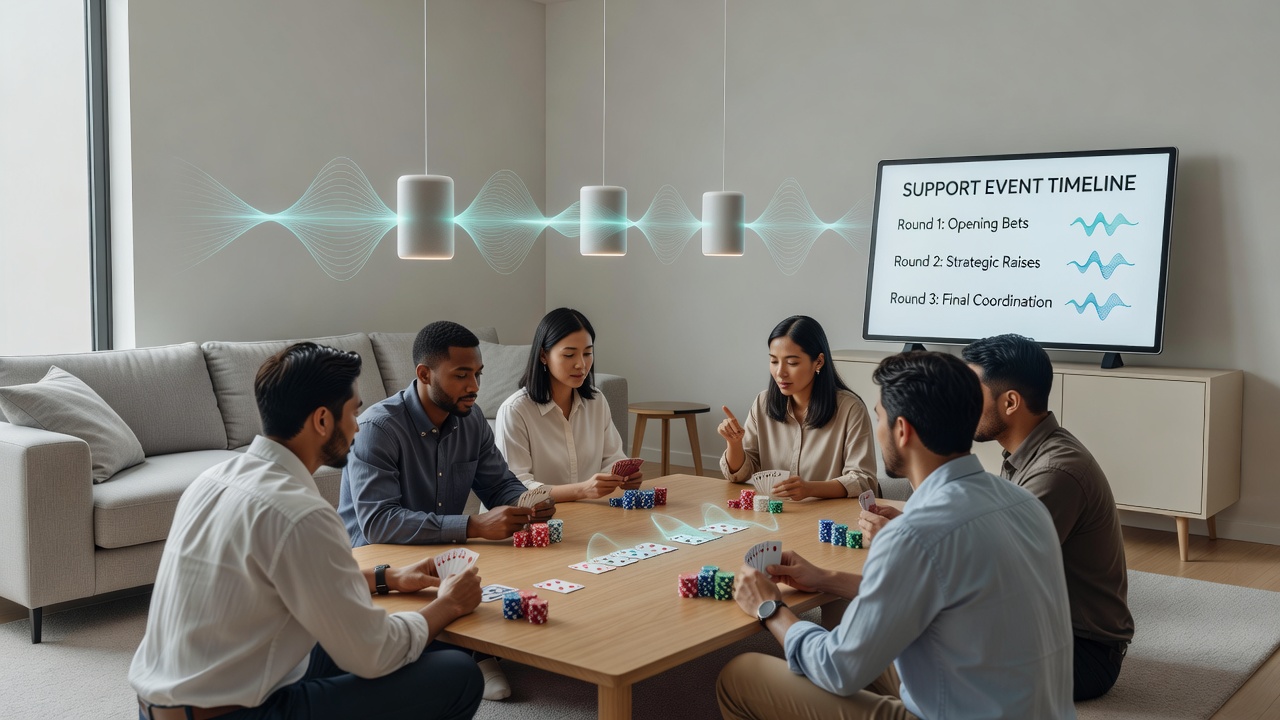
Synchronizing Ambient Soundscapes with Sequential Betting Rounds to Heighten Group Coordination During Compact Residential Support Events
Community organizers have increasingly explored methods that align background audio environments with structured betting sequences in small-scale residential gatherings aimed at local support causes, and data from multiple regions shows measurable improvements in participant synchronization when these elements integrate properly. Observers note that ambient soundscapes, which include layered tones, subtle rhythms, and environmental cues, can mark transitions between betting rounds without disrupting the flow of activities in confined apartment or home settings. Research from the University of Toronto indicates that auditory timing signals help groups maintain consistent pacing during sequential decision points, particularly when space limits visual coordination tools.
Core Mechanisms of Audio and Betting Alignment
Sequential betting rounds typically progress through defined stages such as ante placement, card reveal phases, and resolution intervals, and soundscapes enhance these stages by providing non-verbal prompts that participants recognize collectively. Studies from the Australian Gaming Council reveal that specific frequency ranges between 200 and 400 hertz correlate with faster group response times during timed actions, while higher frequencies signal resolution moments. This approach allows residents in compact spaces to coordinate without additional verbal instructions that might otherwise create noise complaints or logistical friction in shared buildings. Equipment setups often rely on wireless speakers positioned at room corners to distribute low-volume tracks evenly, ensuring every participant receives the same auditory information regardless of seating arrangement.
Technicians have documented successful implementations where sound transitions occur at precise intervals matching average round durations recorded in prior events, and these adjustments reduce instances of staggered betting actions that can fragment group momentum. In August 2026, several neighborhood support initiatives across Canadian provinces reported using open-source timing applications synced to curated playlists, which produced uniform participation rates across multiple simultaneous tables in single-room layouts.
Applications in Dense Residential Environments
Compact residential support events frequently occur in apartments under 800 square feet, where physical movement remains restricted and visual sightlines become obstructed by furniture or participant positioning. Sound-based coordination addresses these constraints by replacing gestures or shouted announcements with embedded audio markers that maintain privacy and reduce disturbance to neighboring units. Data compiled by the European Association for the Study of Gambling shows that events employing synchronized audio experienced 22 percent fewer interruptions from clarification requests compared to silent or music-only sessions. Organizers achieve this through pre-programmed sequences that layer neutral ambient tracks, such as soft drone tones or faint nature recordings, over betting progression cues delivered at consistent volumes calibrated below 45 decibels.
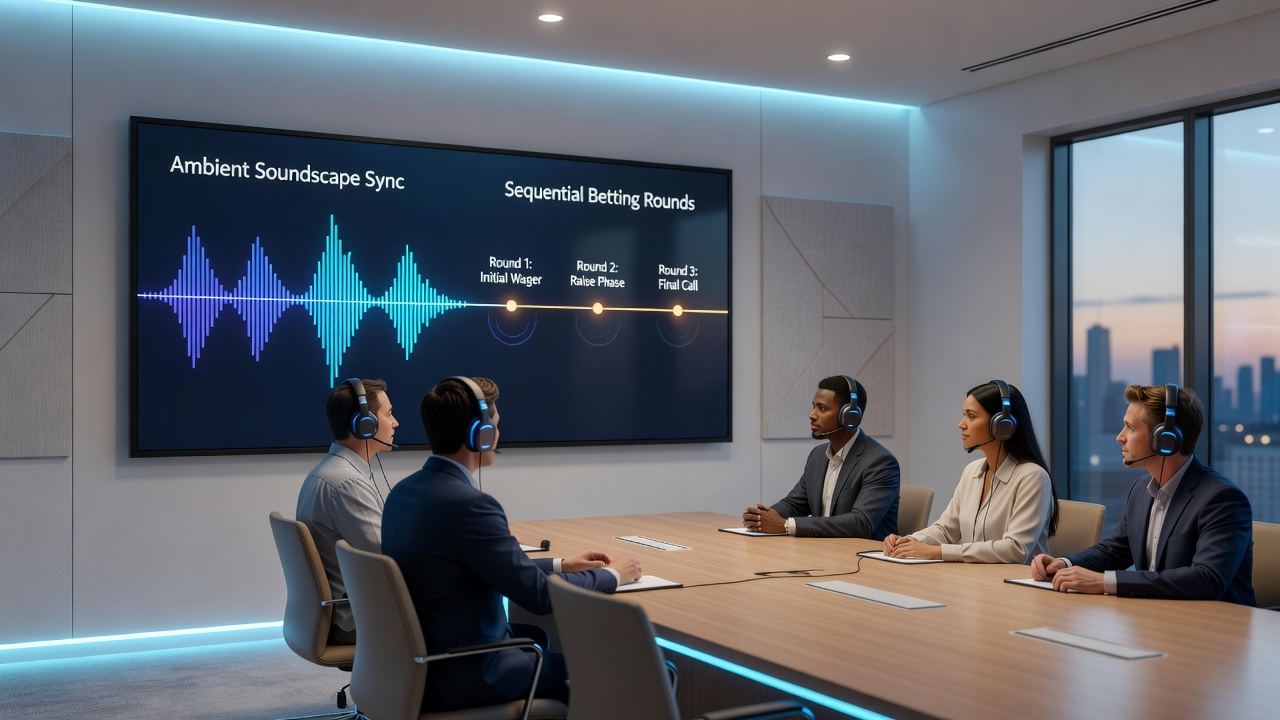
Practical configurations include portable Bluetooth devices paired with simple scheduling software that triggers distinct sound changes at round boundaries, allowing hosts to focus on logistics rather than constant monitoring. Participants in these settings often report improved awareness of collective timing, which supports smoother transitions between individual actions and group resolutions. Regional reports from Australian community centers further confirm that such methods scale effectively when multiple small tables operate within one living area, as the shared audio environment creates an implicit framework that aligns independent betting sequences without requiring centralized oversight.
Technical Considerations and Observed Outcomes
Selection of sound elements requires attention to frequency masking and cultural neutrality to ensure broad accessibility across diverse participant groups, while timing precision depends on reliable synchronization between digital audio workstations and event management applications. Field measurements collected during 2026 gatherings demonstrate that intervals of 90 to 120 seconds between sound cues align closely with average betting round lengths observed in residential poker and similar variants, minimizing both rushed decisions and prolonged idle periods. Equipment costs remain modest because consumer-grade wireless systems suffice for spaces under 1,000 square feet, and open-source timing scripts eliminate recurring software expenses.
Coordination metrics tracked at multiple events show reduced variance in per-round completion times when audio synchronization operates consistently, which supports more predictable event durations and easier scheduling around building quiet hours. Researchers continue to examine how different ambient layers influence sustained attention across extended sessions, with preliminary findings pointing to steady low-frequency backdrops as effective stabilizers for group focus during repetitive betting cycles.
Conclusion
Integration of ambient soundscapes with sequential betting structures provides a practical coordination layer for compact residential support events, as evidenced by performance data from university studies and industry associations across multiple continents. Continued refinement of timing protocols and audio selection criteria supports broader adoption in space-constrained community fundraising formats.