Mapping Community Engagement Through Custom Dice Roll Variations in Home-Based Charity Casino Events
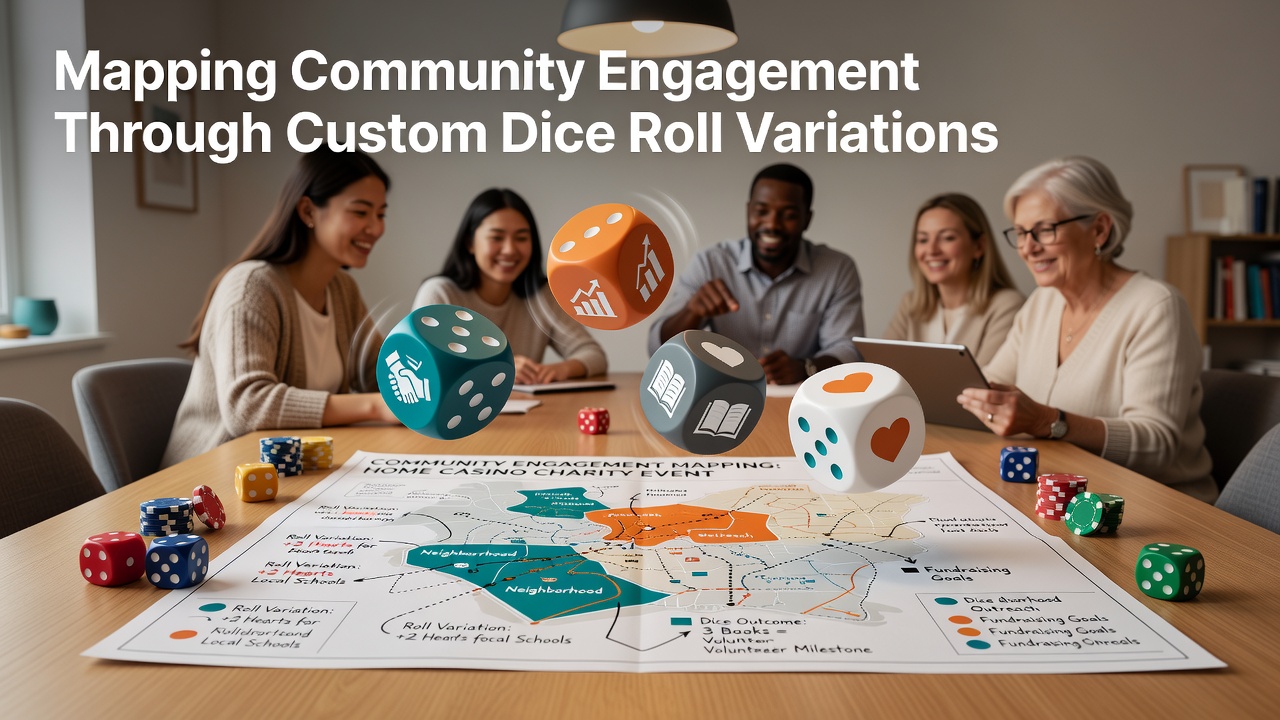
Organizers of home-based charity casino events have increasingly turned to custom dice roll variations as a method for mapping community engagement levels during fundraising activities. These variations modify standard dice outcomes in games like craps or simplified dice tables to record participation metrics, donation patterns, and volunteer contributions without disrupting the flow of play. Data from multiple regional events shows that such adaptations allow hosts to track how different groups interact with the gaming setup over the course of an evening.
Core Mechanics of Custom Dice Variations
Standard six-sided dice receive overlays or replacement faces that assign engagement values alongside traditional numbers. A roll of four might trigger a base bet while simultaneously logging a participation point for the player in a shared database or chart maintained by event staff. Hosts combine these with color-coded dice sets where each hue corresponds to a specific community metric such as time spent at the table or number of side bets placed. Research from university gaming labs indicates that these layered systems produce measurable data points that correlate directly with overall event attendance figures.
Participants roll the modified dice during regular game rounds, and the results feed into both the payout structure and an engagement map displayed on a central board. One common approach uses transparent dice filled with small tokens that represent donation tiers, so each throw visibly contributes to a running tally visible to everyone present. This setup keeps the focus on the game while the data collection happens in the background through simple observation or digital apps synced to the rolls.
Tracking Participation Across Different Groups
Event coordinators divide attendees into demographic segments before play begins, then monitor how each segment responds to particular dice outcomes. Younger players might cluster around tables with dice that award bonus rolls for social media shares, while older groups favor variations that tie rolls to physical volunteer sign-ups. Figures from events held in July 2026 across several mid-sized communities reveal consistent patterns where custom dice increased repeat table visits by measurable percentages compared to standard setups.
These maps emerge from cumulative roll data collected over multiple hours. A spreadsheet or simple app tallies outcomes, and organizers later overlay heat maps showing which variations drew sustained interest. The process relies on passive recording rather than active polling, which keeps the atmosphere casual and focused on entertainment.
Integration with Home Venue Constraints
Space limitations in residential settings influence how dice variations get implemented. Hosts often use compact felt layouts marked with engagement zones that align with specific roll results, allowing one table to serve multiple data-collection purposes. Wireless counters placed near dice trays capture outcomes automatically and feed them into a central log without requiring extra staff. Observers note that this approach scales well for events raising funds for local causes, since the same equipment supports both gaming and metrics gathering.
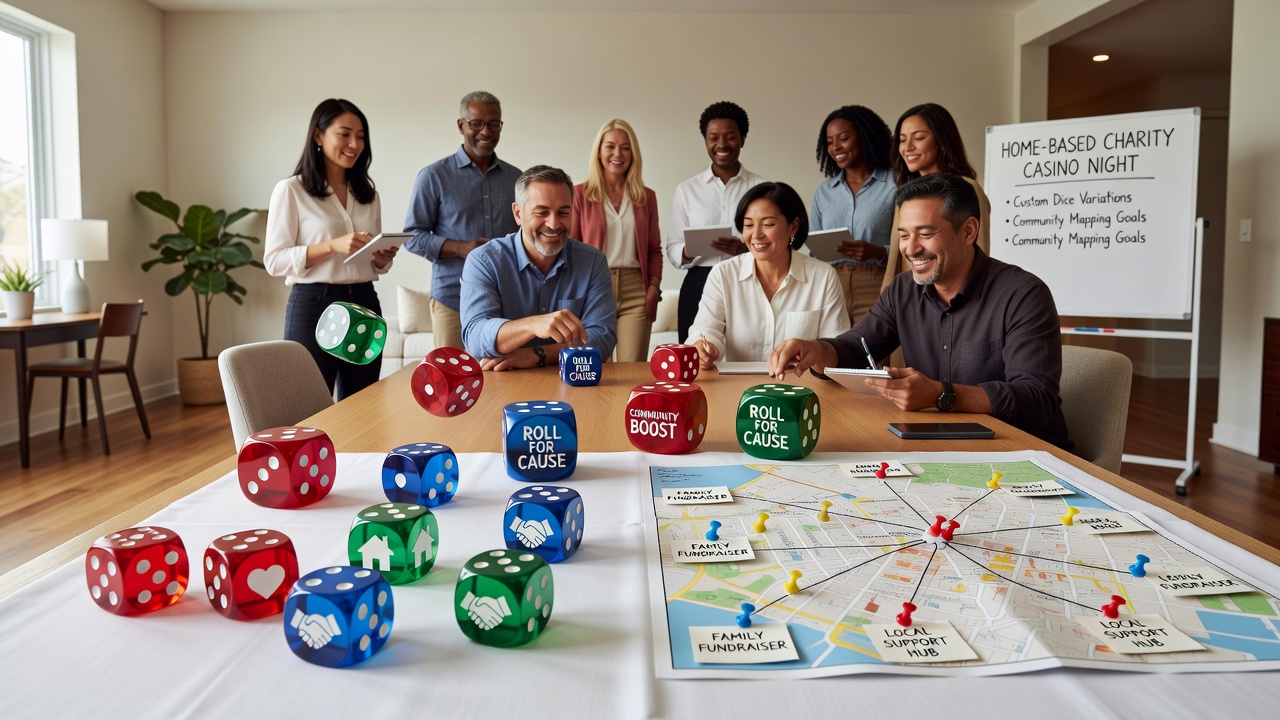
Materials remain inexpensive and readily available. Adhesive number stickers or custom-printed sleeves transform ordinary dice into data tools, and many groups reuse the same sets across several events. The flexibility lets organizers adjust variations between fundraisers based on prior mapping results, refining which rolls best highlight engagement gaps.
Examples from Recent Community Events
One neighborhood fundraiser in the Midwest adapted dice to include symbols that directed portions of winnings toward different charity buckets, with each symbol tied to a community subgroup. Roll frequency data later showed higher engagement from families when the symbols emphasized education-related causes. Similar adaptations appeared in coastal events where dice faces incorporated local landmarks, and the resulting maps helped organizers identify which age brackets responded most strongly to thematic elements.
Reports compiled by the American Gaming Association highlight how small-scale events contribute to broader industry understanding of participation trends, even though these home gatherings operate outside commercial regulatory frameworks. Meanwhile, documentation from the Canadian Gaming Association provides comparative data on volunteer-driven events in different provinces, showing that dice-based tracking methods produce similar engagement profiles across borders.
Data Utilization After the Event
Once the final rolls conclude, hosts compile the maps into reports that guide future planning. Patterns such as which dice variations produced the longest player retention times or highest per-person donation averages become reference points for the next gathering. These insights stay internal to the organizing group yet feed into larger conversations among charity networks about effective engagement tools. Academic studies from institutions like the University of Nevada have examined similar low-stakes gaming environments and confirmed that outcome variations can reliably surface behavioral data when applied consistently.
Conclusion
Custom dice roll variations continue to serve as practical instruments for mapping community engagement in home-based charity casino events. The approach combines familiar gaming mechanics with straightforward data collection, producing maps that reflect real participation levels across different attendee groups. As events in July 2026 and beyond refine these techniques, the resulting records help organizers allocate resources more effectively while maintaining the social focus that defines successful local fundraisers.