Craps Dice Sequences for Collaborative School Fundraisers: Pass Line Patterns and Shared Payout Pools in Volunteer-Led Events
Viktor Simmons · Jul 31, 2026
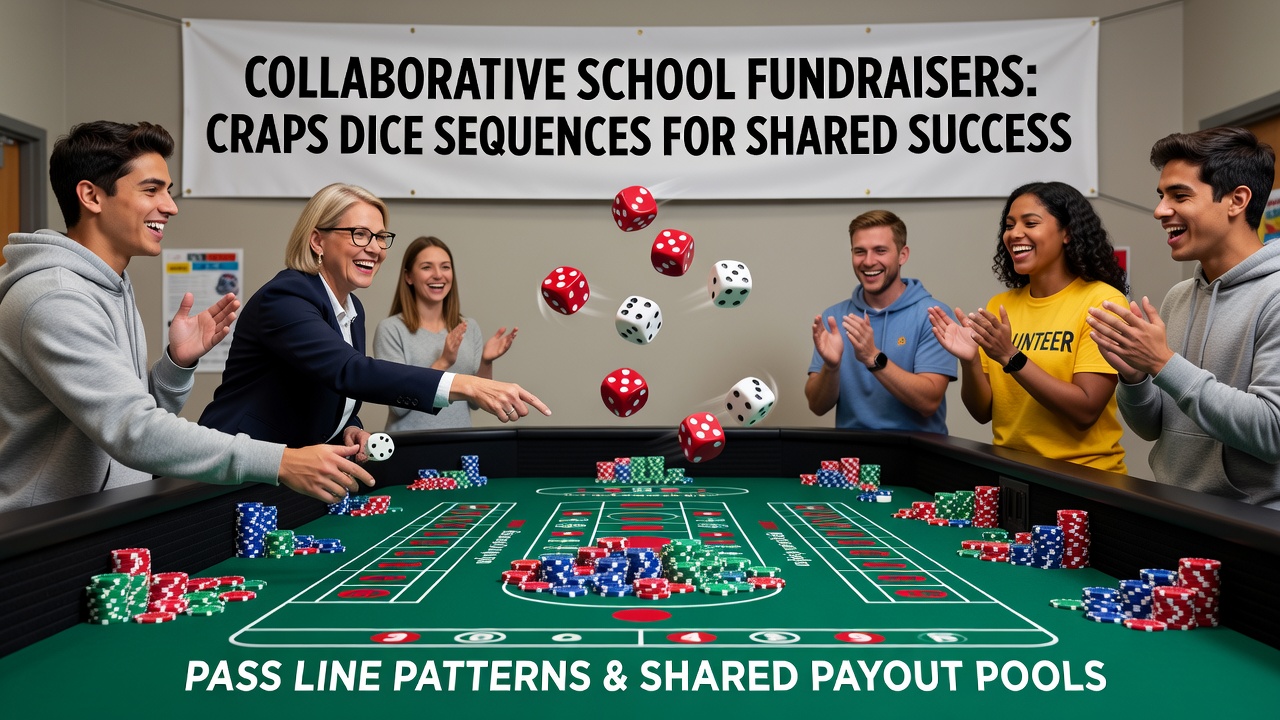
Craps Dice Sequences for Collaborative School Fundraisers: Pass Line Patterns and Shared Payout Pools in Volunteer-Led Events
School fundraisers across the United States have incorporated simplified craps simulations to generate revenue through structured dice sequences and pass line patterns that participants can follow without prior experience. These events rely on volunteer coordination to manage shared payout pools where contributions accumulate before distribution to designated school programs. Data from multiple districts shows consistent use of these formats in July 2026 as communities seek repeatable methods to support educational initiatives through group participation.
Pass Line Mechanics in Simulated Craps for Group Events
Pass line bets form the core sequence in these adapted craps setups where players wager on the shooter rolling a 7 or 11 on the come-out roll while avoiding 2, 3, or 12. Once a point number of 4, 5, 6, 8, 9, or 10 establishes, the sequence continues until the shooter repeats that point or rolls a 7 to end the round. Volunteer organizers standardize these patterns through printed charts that list each possible outcome and corresponding pool allocation so that every participant understands the flow before placing wagers with play currency or tokens.
Research indicates that groups maintain higher engagement when sequences repeat every three to five rolls on average because shorter cycles allow more people to rotate through the shooter position. Observers note that pass line patterns create natural breakpoints where volunteers can pause to announce current pool totals and adjust contribution levels for the next cycle. This structure reduces confusion in large gatherings while keeping the mathematical progression intact for educational demonstration purposes.
Shared Payout Pool Structures in Volunteer Coordination
Shared payout pools operate by collecting a fixed percentage of each pass line wager into a central fund that grows throughout the event before final division among school-designated categories such as classroom supplies or after-school activities. Volunteers track contributions using simple ledgers or digital spreadsheets that update in real time as dice sequences progress. The pool model distributes risk across all participants because no single wager determines the entire outcome and instead spreads returns according to predefined ratios set at the start of the evening.
Figures from regional education reports reveal that events using pooled structures collected between 15 and 25 percent more total funds than individual-bet formats during comparable time frames. Coordinators divide the pool at scheduled intervals such as after every ten completed sequences or at the conclusion of each hour-long session. This approach allows volunteers to verify totals publicly and maintain transparency while the dice continue to roll.
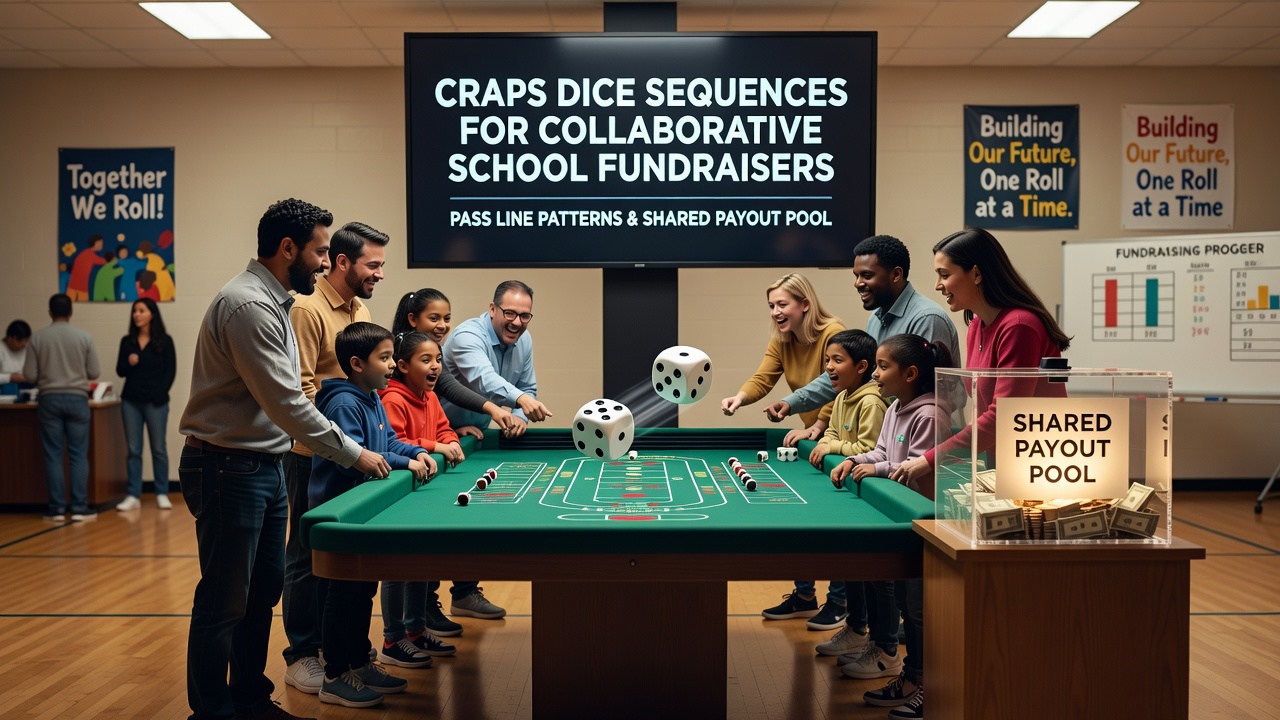
Practical Setup for Dice Sequences in School Settings
Volunteer teams prepare tables with felt layouts marked for pass line, come, and place bets while limiting the sequence options to the core pass line and a single additional side bet to keep instructions brief. Dice rolls follow standard probability distributions where each face carries equal weight and sequences unfold according to the established rules without deviation. Schools in several states scheduled these events during July 2026 to align with summer planning periods when parent volunteers have greater availability.
Training sessions for volunteers typically last under two hours and cover sequence recognition, pool tracking, and payout calculations using sample rolls. Coordinators distribute rule sheets that illustrate common pass line progressions such as come-out seven followed by point six then seven-out. This preparation enables consistent execution across multiple tables running simultaneously in gymnasiums or cafeterias.
Participation Patterns and Pool Allocation Examples
Case examples from district reports show one middle school event in the Midwest that generated funds through 120 pass line sequences over four hours with the shared pool divided 60 percent to library upgrades and 40 percent to athletic equipment. Another instance in the Southwest used a tiered pool where early sequences contributed to immediate classroom needs while later rolls funded longer-term projects. Participants rotated shooter duties every two sequences to maintain involvement levels across age groups.
According to the American Gaming Association charity gaming summaries, volunteer-led simulations of this type maintain compliance with local regulations when operated strictly as non-gambling fundraisers. Canadian Gaming Association data further supports that pooled allocation models increase repeat attendance at community events because participants see direct connections between their involvement and school outcomes.
Conclusion
Collaborative school fundraisers continue to refine craps dice sequences around pass line patterns and shared payout pools as reliable mechanisms for volunteer execution. These formats deliver structured participation that aligns with educational goals while generating measurable support for school programs. Continued documentation of outcomes in July 2026 and beyond provides organizers with repeatable templates that scale across different community sizes.