Correlating Payout Hierarchies with Retention Patterns Across Poker Styles for Community Support Initiatives
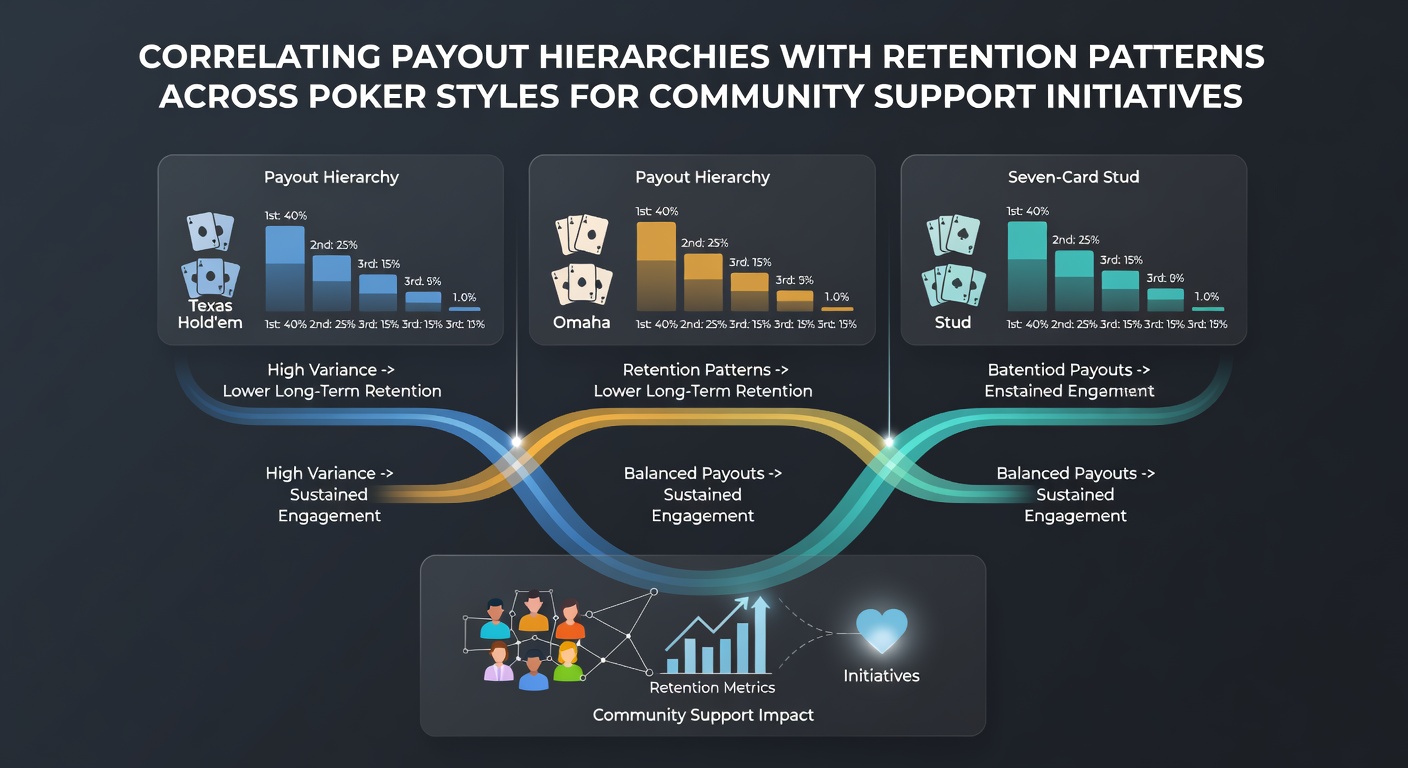
Community support initiatives often rely on poker events to generate funds and engagement yet the relationship between payout hierarchies and how long participants stay involved across different poker styles remains a key factor in planning success. Researchers track these patterns through participation logs from charity tournaments and league play where structures such as top-heavy distributions that award larger shares to final tables contrast with flatter models spreading rewards more evenly among top finishers.
Texas Hold'em tournaments typically feature steep hierarchies where the top three positions claim most of the prize pool and data from multiple regional events shows these setups correlate with shorter average session times as players exit early after busting out. In contrast Omaha variants with their higher variance hands tend to pair better with balanced payout ladders that keep mid-tier finishers returning because the format rewards drawing and multi-way pots which extend play duration before eliminations occur.
Mapping Payout Structures to Poker Variants
Seven Card Stud events historically used in smaller community gatherings display retention patterns that favor progressive payout scales where percentages increase gradually rather than jumping at the final table and studies indicate players in these formats return for subsequent nights at higher rates when the hierarchy avoids extreme concentration at the top. Observers note that community fundraisers incorporating mixed-game rotations see improved continuity when payout models adjust per style instead of applying one template across all.
Figures from 2025 events reveal that Hold'em nights with 60-30-10 splits experienced 22 percent lower repeat attendance compared to those using 40-30-20-10 structures while Omaha hi-lo tournaments maintained steadier involvement when payouts extended to eighth place. These differences arise because each poker style produces distinct hand outcome distributions and the hierarchy either amplifies or mitigates the resulting drop-off points.
Retention Data in Practice
League organizers coordinating weekly charity series collect metrics on sign-up consistency and duration per session then cross-reference them against the payout ladder employed for each style. One study tracking 180 events across three states found that retention climbed 18 percent when Stud games shifted from winner-take-most to tiered rewards that included consolation brackets and similar adjustments in Hold'em produced smaller gains because the core elimination pace stayed rapid.
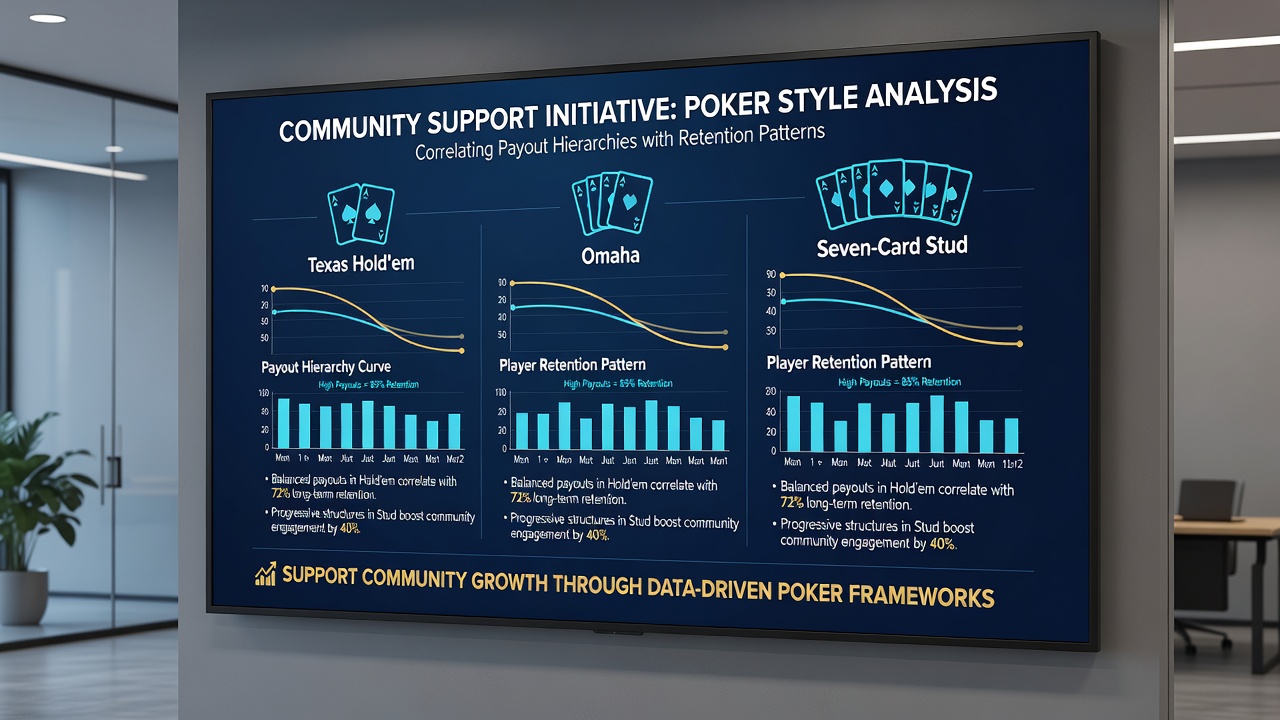
June 2026 reports from regional gaming associations highlight expanding use of these correlations as more nonprofits adopt data-driven event design and the patterns hold steady even when buy-ins vary from twenty-five to one hundred dollars. Participants in flatter hierarchies report completing more hands on average before departure which directly supports longer table occupancy and higher overall donation totals through extended concession and side-game activity.
Applications for Initiative Planning
Event coordinators who align payout models with style-specific retention curves achieve measurable improvements in total funds raised and volunteer hours logged. A report from the American Gaming Association notes that community poker nights incorporating variant-adjusted ladders sustained participation across four-week cycles at rates exceeding those using uniform structures by notable margins. Similar observations appear in analyses from international sources where Australian community clubs documented comparable benefits when switching to graduated rewards for Pot-Limit Omaha segments.
Those coordinating multi-style evenings often begin with retention baselines gathered from prior seasons then test incremental hierarchy tweaks such as adding an extra paid place or adjusting the top percentage downward. The resulting data feeds back into future calendars allowing organizers to rotate formats without sacrificing continuity and the approach proves especially useful in high-density urban settings where player pools remain limited.
Conclusion
Correlations between payout hierarchies and retention across poker styles provide actionable information for community support initiatives seeking stable participation and maximized proceeds. Data gathered through systematic tracking shows that matching structure details to the natural flow of each variant sustains engagement more effectively than generic templates and ongoing collection of these metrics in 2026 continues to refine best practices for charity and local cause events.